
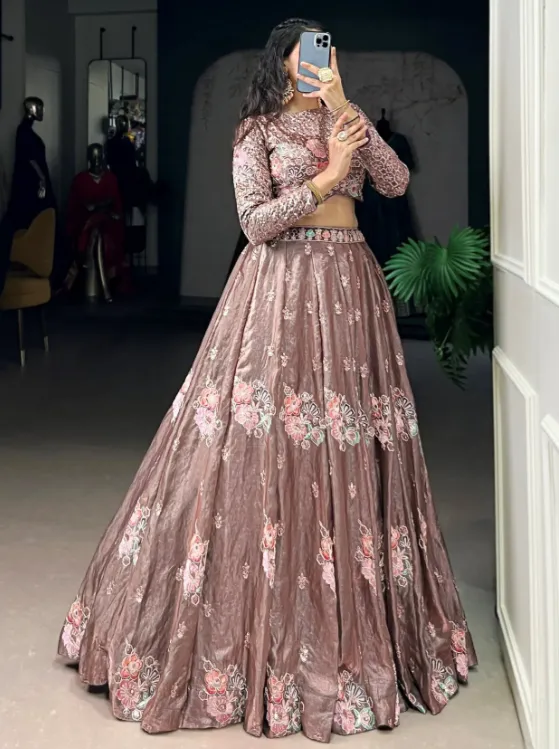
Pair a crop top with lehenga skirts from two outfits you already own. With one, the blouse might just skim the waistband. With the other, a strip of skin shows even though the top hasn’t moved. That small experiment tells you more about coverage than a model’s height or the word “cropped” in a description. If you want your waist covered for the ceremony and like a shorter blouse for dinner, you can plan for both before you choose the set.
Find the Waistband’s Resting Place
Start by finding the place where the skirt feels comfortable enough to leave alone. Fasten it there and sit down for a minute. Pulling a waistband higher can close a gap at the front, but it also raises the hem and moves any embroidery that was meant to sit at the waist. If you like where the skirt falls already, keep that position. The easier change may be a slightly longer blouse, particularly when the set comes with unstitched choli fabric.
Mark Where the Blouse Ends
At a blouse fitting, a narrow ribbon can stand in for a hem that hasn’t been cut yet. With the skirt on, have the tailor mark where you want the blouse to finish at the front, sides and back. Turn sideways to the mirror before agreeing to the line. A curved hem can reach the waistband in front while leaving a little space at the sides. If you want the pieces to meet all the way round, say so while the fabric is still uncut.
Read the Jacket Measurements
A jacket gives you sleeves and back coverage, and its cut determines what happens at the front. One olive gold crop top measures fifteen inches long, while its printed jacket measures nineteen inches and has sleeves measuring twenty-two inches. Those extra four inches tell you where the jacket may fall relative to the top. They tell you very little about whether the two front edges meet. Compare it with a jacket you own, paying particular attention to these five details.
-
Note where the hem meets the skirt.
-
Check the front edges for overlap.
-
Check the position of any fastenings.
-
Compare sleeve lengths with your preferred pair.
-
Sit down to check the back coverage.
Decide How Much Shows Through
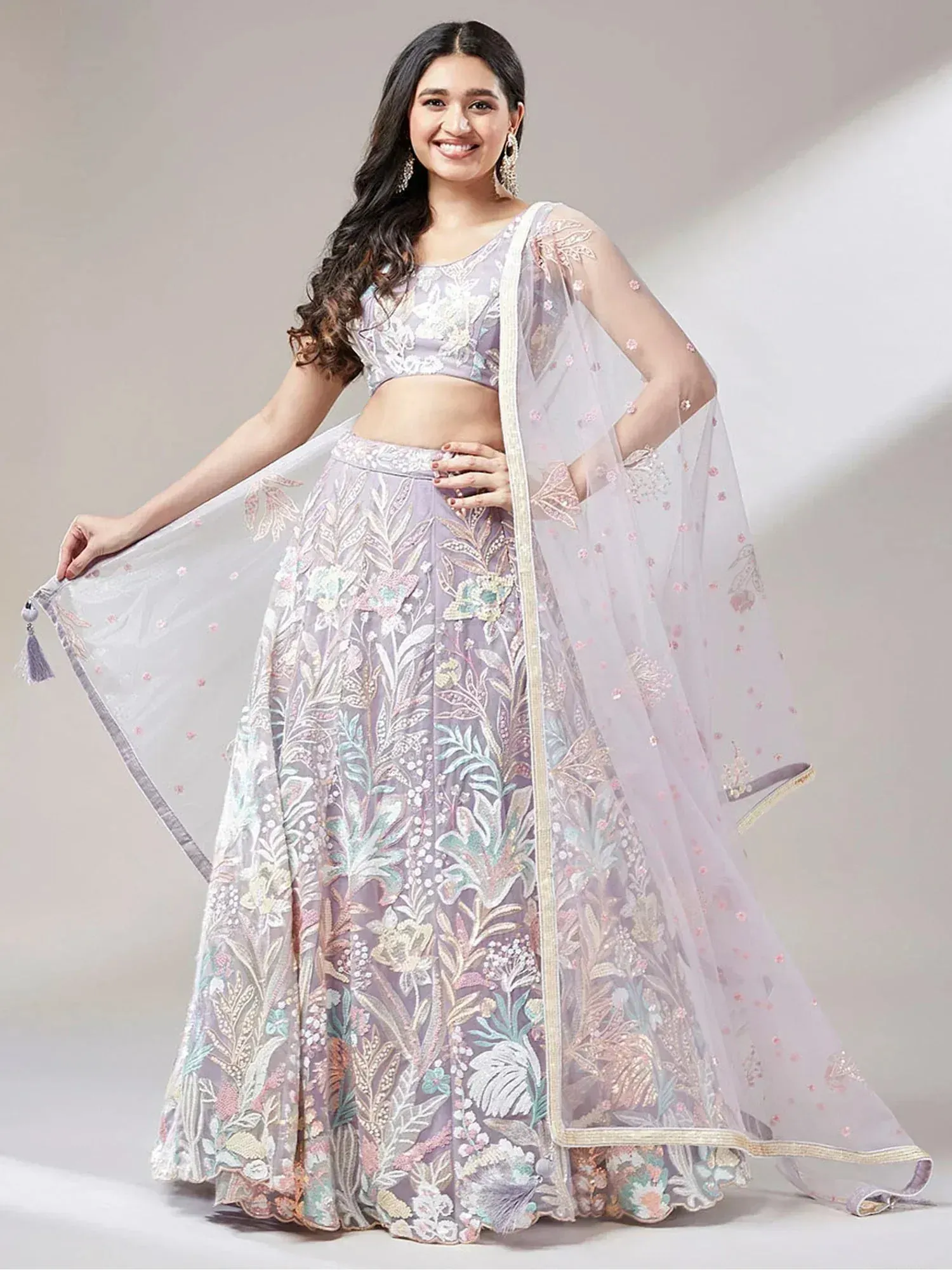
For softer coverage across the waist, a net lehenga choli with dupatta gives you a layer you can arrange yourself. One teal green set includes an embroidered blouse piece and a matching net dupatta with a decorative border. Spread the net across your front, and you can still see the outline and colour underneath it. Fold the fabric over itself, and the overlap looks denser across a narrower area. Try both drapes over your blouse to see which gives you the finish you prefer.
When You Prefer Opaque Coverage
If you want an opaque layer from shoulder to waist, decide where it belongs before choosing extra fabric. Lining inside a cropped blouse can make a sheer bodice opaque, but it ends wherever the blouse ends. A longer camisole underneath can cover the remaining gap. Try one in the blouse colour for a continuous line or in the skirt colour to make the waistband appear higher. Look at the straps beside the blouse neckline as well as the band of colour at the waist.
Plan for the Dinner Change
Keep the detachable layer in mind when choosing how to get dressed for each part of the day. A jacket you can slip off at your seat suits a quick change before dinner. A dupatta secured under a belt takes a little more privacy to rearrange, particularly if the blouse underneath has back ties. Choose a spot for the extra piece before you remove it. A labelled garment bag in the dressing room is easier to find later than the back of a banquet chair.
Conclusion
Before the blouse is cut or the order confirmed, give the tailor a description you might use with a friend. “I want the top to meet the skirt when I sit down, and I’d like my arms covered until dinner.” That gives the tailor two details to work with. A longer blouse can take care of the first, while a removable jacket can take care of the second. You still get to wear the cropped silhouette exactly as you like it once dinner begins.